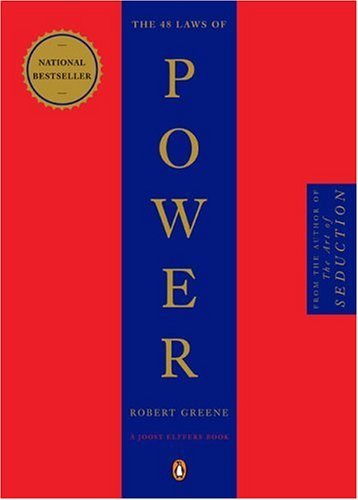
A leader must move with nothing less than absolute confidence. The bolder the lie, the better. It is by the greatness of the lie does the enemy no longer sees the lie. The sheer audacity of the lie makes it more convincing. Audacity creates fear and thus becomes power and, with power, anyone can do the impossible.
Once hesitant, a person is no longer in power and thus no longer in control. A leader cannot lead with “maybe”s and “I think”s. Hesitation only creates gaps wherein the enemy can intervene. A half heart digs a deep grave.
In May 1925, five successful scrap-metal businessmen were invited to buy off the Eiffel Tower from the government, with the reason that its maintenance cost was too high and the liked. Attracted, one of them won a bid for the tower. However, once the businessman was suspicious of the credibility of the deal, the “official” asked for a bribe, which made the deal more believable and put the businessman in relief. It is only in the next few days that the businessman found out that the Eiffel Tower was not being sold and he had lost 250,000 francs.
We can see when the con artist saw the hesitation of the businessman, he made his lie bolder by asking for a bribe, which ultimately led to his success.
In Russia, a young Ivan, heir to the throne but a mere child, was overthrown by his father's rivals, the boyars. After a several years of silent withdrawal, he suddenly ask the Prince Andrei Shuisky to come to his room. There he ordered the royal guard, who grew to hate the boyars, to have the prince executed. Withing the next few days he banished all of Andrei's associates. This is the story of the Ivan the Terrible.
In Ivan's case, his sudden boldness and shift action caught his rivals off guard and led him to reclaim his throne.
However, boldness is only a tactical strategy and should not always be the basis of all your actions. If audacity is your only weapon in life, you will offend too many people and leave you too vulnerable.
Jan Christian Leyson
hi 18 - L
Tuesday, December 23, 2008

Monday, December 22, 2008
Law 8 MAKE OTHER PEOPLE COME TO YOU- USE BAIT IF NECESSARY
Making other people come to you seems like a pretty obvious tactic for those who desire or have power but knowing this fact is far from actually being able to implement it, let alone master, it. The essence of this tactic is twofold: one, is it is simply a way of being implementing another tactic that is having control. By making people come to you you force them to abandon their plans and conform to your own mind's concotions, uknowing of what comes next. Knowledge is power, as they say. The great Napoleon Bonaparte's minister, Talleyrand expertly put shows this effect of making people come into your own territory.
Talleyrand made Napoleon come to him by baiting him with he sweet temptations of mass support and appeal in his homeland through Napoleon's many visitors in Elba. By convincing others of his motives, he succesfully got Napoleon back to France unscathed and without challenge. But after Napoleon had regained power, he quickly lost it due to a scarcity of resources. Talleyrand was very aware of the circumstances when he laid his trap. By controling all the variables in your territory and drawing your unsuspecting prey into your turf, control is maximized.
The second thing that this tactic tries to accomlish is that it hopes to drain the ones being drawn out of their energy thus denying them their full potentials and capabilities. This is quite obvious and simple but is devilishly put into use by the Japanese in their war against the Russians in 1905.
The Japanese had a vastly inferior navy to Russia but by baiting them with false rumors that exxagerated their inferiority, they lured the Russians to attack. Because the shortest possible way to Japan was British territory, the only way they had left was by passing the Cape of Good Hope. By again, spreading false rumor that the Japanese were sailing to launch a counter-attack, the already tired seamen on their way were hit by another blow of stress and anxiety thus making them unfit for battle when they reached Japan, making theirs and easy victory.
A counter to this tactic is its obverse, striking quickly and aggressively. This forces the agressee to be in a state of panic and forces them to respond to your moves thus serving the same purpose. This can be taken that the rule is not absolute but rather its purpose is what it hopes to attain, which is attainable through other methods. This brings us to another saying, does the end, sometimes, not justify the means?
Diego Elpidio Juan Canlas Ibañez
Hi-18 K
Talleyrand made Napoleon come to him by baiting him with he sweet temptations of mass support and appeal in his homeland through Napoleon's many visitors in Elba. By convincing others of his motives, he succesfully got Napoleon back to France unscathed and without challenge. But after Napoleon had regained power, he quickly lost it due to a scarcity of resources. Talleyrand was very aware of the circumstances when he laid his trap. By controling all the variables in your territory and drawing your unsuspecting prey into your turf, control is maximized.
The second thing that this tactic tries to accomlish is that it hopes to drain the ones being drawn out of their energy thus denying them their full potentials and capabilities. This is quite obvious and simple but is devilishly put into use by the Japanese in their war against the Russians in 1905.
The Japanese had a vastly inferior navy to Russia but by baiting them with false rumors that exxagerated their inferiority, they lured the Russians to attack. Because the shortest possible way to Japan was British territory, the only way they had left was by passing the Cape of Good Hope. By again, spreading false rumor that the Japanese were sailing to launch a counter-attack, the already tired seamen on their way were hit by another blow of stress and anxiety thus making them unfit for battle when they reached Japan, making theirs and easy victory.
A counter to this tactic is its obverse, striking quickly and aggressively. This forces the agressee to be in a state of panic and forces them to respond to your moves thus serving the same purpose. This can be taken that the rule is not absolute but rather its purpose is what it hopes to attain, which is attainable through other methods. This brings us to another saying, does the end, sometimes, not justify the means?
Diego Elpidio Juan Canlas Ibañez
Hi-18 K
Saturday, December 20, 2008
Law 23: Concentrate Your Forces
Conserve your forces and energies by keeping them concentrated at their strongest point. You gain more by finding a rich mine and mining it deeper, than by flitting from one shallow mine to another – intensity defeats extensity every time. When looking for sources of power to elevate you, find the one key patron, the fat cow who will give you milk for a long time to come.
Law 23 is basically, in a way, connected to the law of attraction.
It talks about how our focus and attention in life has to be centered on what we really want and how to get there. What we do in general has to always revolve around our main and end goal. And despite the many other decisions, choices and distractions we come across along the way, we must never lose track and instead hold on and maximize the path that will lead us to where we really want to go.
In the same way, in the law of attraction, priorities have to be set before we pursue anything in our lives. Once that has been set, we must concentrate and think positively on our target and constantly aspire to get there. The clearer and more positive our outlook, the less complicated and easier it will be to achieve what we want. Our positive and focused energy will be a magnet for that.
In both principles, they simply stress the need to give attention to and strengthen our energies towards our objectives. It is all about focusing on what we really want and doing things that will help us make it happen. In law 23, every outcome that we want to happen or that will take place will depend and revolve around how much concentration we put to it.
An example would be a man juggling 3 sports at a time, let’s say baseball, soccer and basketball. The man can be good in all sports, but the tendency is he would only be able to reach a certain level because he has two other sports to focus on. But when the man only plays one sport then he is able to put all his focus in training, conditioning, and weights training. Because he does not need to balance so much his concentration is only on one thing which gives him a greater opportunity to master the sport and surpass any competitors.
Tiffany Mathay
Hi 18 -L
Law 23 is basically, in a way, connected to the law of attraction.
It talks about how our focus and attention in life has to be centered on what we really want and how to get there. What we do in general has to always revolve around our main and end goal. And despite the many other decisions, choices and distractions we come across along the way, we must never lose track and instead hold on and maximize the path that will lead us to where we really want to go.
In the same way, in the law of attraction, priorities have to be set before we pursue anything in our lives. Once that has been set, we must concentrate and think positively on our target and constantly aspire to get there. The clearer and more positive our outlook, the less complicated and easier it will be to achieve what we want. Our positive and focused energy will be a magnet for that.
In both principles, they simply stress the need to give attention to and strengthen our energies towards our objectives. It is all about focusing on what we really want and doing things that will help us make it happen. In law 23, every outcome that we want to happen or that will take place will depend and revolve around how much concentration we put to it.
An example would be a man juggling 3 sports at a time, let’s say baseball, soccer and basketball. The man can be good in all sports, but the tendency is he would only be able to reach a certain level because he has two other sports to focus on. But when the man only plays one sport then he is able to put all his focus in training, conditioning, and weights training. Because he does not need to balance so much his concentration is only on one thing which gives him a greater opportunity to master the sport and surpass any competitors.
Tiffany Mathay
Hi 18 -L
Friday, December 19, 2008
Law #46: Never Appear too Perfect
As you rise in power, attention will inevitably turn on you. The book says that, in these cases, you should not take all the credit, but act in such a way that your "audience" will see that your achievement is "attainable" as well. It is just not natural for people to be too perfect, and appearing so will create envy in other people. This envy will make them turn either hypocritical, or over-praising; both indications of upcoming trouble. You should acknowledge some shortcomings to appear more human, to make people see you as this real and approachable person. In short, never take all the credit for your accomplishments. Say that luck or other factors also had a play in your success.
An example of a person who may relate to this law is Joseph. When he told his dream to his brothers, it was not exactly an "achievement" yet, but as he is already envied by his brothers, his dreams of success led to more envy, which became the cause of his demise. He redeemed himself, though, in the future, when he was already a vizier. He said that it was in the LORD's plan to save their family that they [his brothers] sold him to the passing traders (sort of emphasizing the "fate" part that he is in that position).
But in this age, where people are generally more competitive, and want to project that he/she is always better than the next person, what are the pitfalls of admitting to your weaknesses?
Sydney Arbilo~
070244
HI18-L
An example of a person who may relate to this law is Joseph. When he told his dream to his brothers, it was not exactly an "achievement" yet, but as he is already envied by his brothers, his dreams of success led to more envy, which became the cause of his demise. He redeemed himself, though, in the future, when he was already a vizier. He said that it was in the LORD's plan to save their family that they [his brothers] sold him to the passing traders (sort of emphasizing the "fate" part that he is in that position).
But in this age, where people are generally more competitive, and want to project that he/she is always better than the next person, what are the pitfalls of admitting to your weaknesses?
Sydney Arbilo~
070244
HI18-L
Law 26: Keep your hands clean.
Men and women who have risen to power all have something in common; clean hands. Law 26 is all about either acting in a manner that no matter what happens, you’re free of blame or dealing with mistakes or circumstances in a manner that avoids the impending blame altogether. They never directly involve themselves (publicly, at least) in mistakes and unpleasant affairs, and they do this in two ways; either by having someone take the fall for their mistakes- a scapegoat, or by having someone else do their dirty work- a cat’s paw. The only other way with dealing with inevitable mistakes is to apologize and make excuses.
An example of this law can be seen in our local politics. We all know that a lot of our politicians are corrupt, or are dealing shady business, but these politicos all use cat’s paws that do their dirty work- agents who have agents who have even more agents. The people we see getting caught on the news are often just pawns of even bigger fish. By having others do their dirty work, these politicians safeguard themselves.
However, this law isn’t just used by crooked people. Even the most benevolent of rulers fall onto this rule; the biblical King David fell onto this rule. King David chosen by God; he was seen as a righteous king, but after committing adultery with Bathsheba, he attempted to clean his hands of his deed by Uriah to his death at the front lines. He would have gotten away with it too, if God wasn’t all seeing. This is an example of trying to find a scapegoat.
A contemporary example of confessing to a mistake can be seen in former US president Bill Clinton’s infidelity to his wife, Hillary Clinton. After admitting his mistake, many questioned his ability and right as president, and lead to his impeachment. The problem with confessing to a mistake is the fact that once you do admit to one, it leads to those who follow you to question your abilities. The image of a faultless leader is lost, and people begin to see you as the possible cause of already existing problems. Of course, if you’re a person in power or searching for power, you don’t want others questioning your abilities.
One must ask however, why do people agree to be scapegoats for others? Is the use of a scapegoat justifiable? Should those in power keep their hands clean, or should they be transparent?
Ria Rigoroso
Hi 18 - K
An example of this law can be seen in our local politics. We all know that a lot of our politicians are corrupt, or are dealing shady business, but these politicos all use cat’s paws that do their dirty work- agents who have agents who have even more agents. The people we see getting caught on the news are often just pawns of even bigger fish. By having others do their dirty work, these politicians safeguard themselves.
However, this law isn’t just used by crooked people. Even the most benevolent of rulers fall onto this rule; the biblical King David fell onto this rule. King David chosen by God; he was seen as a righteous king, but after committing adultery with Bathsheba, he attempted to clean his hands of his deed by Uriah to his death at the front lines. He would have gotten away with it too, if God wasn’t all seeing. This is an example of trying to find a scapegoat.
A contemporary example of confessing to a mistake can be seen in former US president Bill Clinton’s infidelity to his wife, Hillary Clinton. After admitting his mistake, many questioned his ability and right as president, and lead to his impeachment. The problem with confessing to a mistake is the fact that once you do admit to one, it leads to those who follow you to question your abilities. The image of a faultless leader is lost, and people begin to see you as the possible cause of already existing problems. Of course, if you’re a person in power or searching for power, you don’t want others questioning your abilities.
One must ask however, why do people agree to be scapegoats for others? Is the use of a scapegoat justifiable? Should those in power keep their hands clean, or should they be transparent?
Ria Rigoroso
Hi 18 - K
Law 13: When Asking for Help, Appeal to People’s Self-Interest, Never to their Mercy or Gratitude
A quote that would best exemplify why this law exists is this:
“Dear, never forget one little point. It's my business. You just work here.”
-Elizabeth Arden, businesswoman, to her husband
The minute the husband acts up or is no good for her, *poof* gone. He’s dispensable regardless of their marriage ties or anything in the past.
The law is basically self-explanatory. Everything was mentioned there: appeal to people’s self-interest and not their mercy or gratitude. An example of a transgression of this law happened in Italy during the 13th century wherein Stefano di Poggio brought about his family’s generosity towards Castruccio Castracani to appeal to his better nature (make him feel guilty and in debt towards them). Since Castruccio had a huge obligation towards the Poggios, he invited them over to his place. Then he had them imprisoned and executed every single one of them. A favorite line of mine from the text was, “Castruccio rid himself of his obligations to the Poggios by eliminating the Poggios.” how morbidly funny, the irony. Before the Peloponnesian War, Corcyra and Corinth were trying to win Athens over as allies. Corinth’s plea was an exciting speech about all the good they did for Athens while Corcyra gave a boring offer was an intimidating alliance against the Spartans. Guess who won? Corcyra of course, this was because Athens is an advanced city and they were still progressing. How can one progress if another one keeps bringing up the past? It’s all about looking into the future.
Asking for help is an art: it requires the ability to understand the people you’re dealing with and not to confuse your needs with theirs. Some people would prefer you to feed their greed while others will gladly feed off your desperation (makes them feel superior towards you), which is why you have to be able to clearly read them. “Self-interest is the lever that will move people…When they ooze greed, do not appeal to their charity. When they want to look charitable and noble, do not appeal to their greed.” Power is all about manipulation: the people, the situation and the outcome.
Why is it easier though to remember one’s mistake and forget all the good one person has done?
- Gloria Gail C. Lim, K
“Dear, never forget one little point. It's my business. You just work here.”
-Elizabeth Arden, businesswoman, to her husband
The minute the husband acts up or is no good for her, *poof* gone. He’s dispensable regardless of their marriage ties or anything in the past.
The law is basically self-explanatory. Everything was mentioned there: appeal to people’s self-interest and not their mercy or gratitude. An example of a transgression of this law happened in Italy during the 13th century wherein Stefano di Poggio brought about his family’s generosity towards Castruccio Castracani to appeal to his better nature (make him feel guilty and in debt towards them). Since Castruccio had a huge obligation towards the Poggios, he invited them over to his place. Then he had them imprisoned and executed every single one of them. A favorite line of mine from the text was, “Castruccio rid himself of his obligations to the Poggios by eliminating the Poggios.” how morbidly funny, the irony. Before the Peloponnesian War, Corcyra and Corinth were trying to win Athens over as allies. Corinth’s plea was an exciting speech about all the good they did for Athens while Corcyra gave a boring offer was an intimidating alliance against the Spartans. Guess who won? Corcyra of course, this was because Athens is an advanced city and they were still progressing. How can one progress if another one keeps bringing up the past? It’s all about looking into the future.
Asking for help is an art: it requires the ability to understand the people you’re dealing with and not to confuse your needs with theirs. Some people would prefer you to feed their greed while others will gladly feed off your desperation (makes them feel superior towards you), which is why you have to be able to clearly read them. “Self-interest is the lever that will move people…When they ooze greed, do not appeal to their charity. When they want to look charitable and noble, do not appeal to their greed.” Power is all about manipulation: the people, the situation and the outcome.
Why is it easier though to remember one’s mistake and forget all the good one person has done?
- Gloria Gail C. Lim, K
Law 41: Avoid Stepping into a Great Man’s Shoes
The 41st law of power implies to the reader to avoid stepping into a great man’s shoes. This law basically says that when you succeed a great man or a powerful and successful parent, you will have a long and difficult journey ahead of you as you will have to make something more magnificent than what they have done in order to be remembered. It encourages the reader to get out of a past not of his own making and step out of the shadow of the great figure by establishing a reputation and identity of one’s self through a radical new course. Thus when inheriting a business empire, do not simply be satisfied with what has been given, expand and innovate into different field less one wish to end up in ruins.
On having a predecessor especially a father who is both glorious and great, be weary as if one does not act, he shall simply disappear in the shadows of the great man. Sometimes the “father” seeks to undermine the efforts of the “son” and tries to put him in line, if the “son” becomes defiant he may be able to be great yet if he falters under the whims of the “father” he will disappear into obscurity. Thus it is said distance one’s self from the past, create a new empire from the foundations of the old, and psychologically imagine to start from scratch for it is through this that one would be able to amass greatness as necessity is what impels men to take action. A proper illustration of this would be Frederick the Great who in his youth was often beaten up by his father for reading books, patronizing the arts and doing many other cultural, scientific and artistic activities which his father considered “unmanly”. This however did not prevent Frederick from pursuing his interest and placed him at odds with his father at many occasions. His father, Frederick Wilhelm I, known to history as “the soldier-king” was a man who preferred to spend all his time in drilling soldiers and forced Frederick to do the same. Later-on when Frederick became King he was able to use everything he had learned whilst reading the many books which his father had considered a waste of time and at the same time what he learned from his father to make Prussia one of the greatest political, cultural and militaristic nation in Europe during the 18th century.
Aaron ChanII –
BS Management
History 18, L
On having a predecessor especially a father who is both glorious and great, be weary as if one does not act, he shall simply disappear in the shadows of the great man. Sometimes the “father” seeks to undermine the efforts of the “son” and tries to put him in line, if the “son” becomes defiant he may be able to be great yet if he falters under the whims of the “father” he will disappear into obscurity. Thus it is said distance one’s self from the past, create a new empire from the foundations of the old, and psychologically imagine to start from scratch for it is through this that one would be able to amass greatness as necessity is what impels men to take action. A proper illustration of this would be Frederick the Great who in his youth was often beaten up by his father for reading books, patronizing the arts and doing many other cultural, scientific and artistic activities which his father considered “unmanly”. This however did not prevent Frederick from pursuing his interest and placed him at odds with his father at many occasions. His father, Frederick Wilhelm I, known to history as “the soldier-king” was a man who preferred to spend all his time in drilling soldiers and forced Frederick to do the same. Later-on when Frederick became King he was able to use everything he had learned whilst reading the many books which his father had considered a waste of time and at the same time what he learned from his father to make Prussia one of the greatest political, cultural and militaristic nation in Europe during the 18th century.
Aaron ChanII –
BS Management
History 18, L
Subscribe to:
Posts (Atom)